

Protein-Packed Chocolate Chip Muffins
A muffin that happens to have protein in it is a much better proposition than a protein bar pretending to be a muffin. These are the former. Peanut butter and maple syrup do the heavy lifting on flavor, a scoop of protein powder and two eggs bring each muffin to 5 grams of protein, and Pamela's 1:1 All-Purpose Flour keeps the crumb tender rather than dense. They come together in three bowls with a whisk, no mixer required, and they are exactly the thing to have in the freezer for mornings that get away from you. One small step matters more than it looks: let the batter rest for fifteen minutes before it goes in the pan. More on why below. So good, no one will guess they are gluten-free, the way Pamela's has done it since 1988.
Why You'll Love These Muffins
- 5 grams of protein per muffin, which is roughly double a standard bakery muffin.
- No mixer. Three bowls and a whisk.
- Sweetened with maple syrup or honey rather than granulated sugar.
- They freeze beautifully, so one batch covers most of a week.
- Peanut butter and chocolate, which needs no further justification.
How Much Protein Is in These Muffins?
Each muffin has 5 grams of protein, based on a batch of 12. That is roughly double what a standard bakery chocolate chip muffin gives you, which is usually around 3 grams.
It comes from four places. The protein powder contributes the most at about 21 grams across the batch. Two eggs add another 12.6. Peanut butter brings 16 grams, though peanut protein is used less efficiently by the body than egg or dairy protein. The milk and the flour make up the rest.
Why we call these protein-packed rather than high-protein. "High protein" is a regulated term in the United States, and it requires at least 10 grams of quality-adjusted protein in a single serving. A muffin is a 55 gram serving, which is a small amount of food to fit that much protein into, and once you account for protein quality these land closer to 4 grams than 10. So the honest description is protein-packed, and the honest number is 5 grams.
If you want a genuinely high-protein gluten-free breakfast, our high-protein waffles clear that threshold, because a waffle is a bigger serving and the batter carries cottage cheese and egg whites rather than powder.
The Secret to Moist Protein Muffins
Protein muffins have a reputation for coming out dry, and it is deserved. Protein powder absorbs a lot of liquid without softening the way starch does, so a batter that looks right in the bowl bakes up tight. Three things prevent it here.
Let the batter rest for 15 minutes before scooping. This is the one people skip and it matters most. Gluten-free flour is rice-based and hydrates slowly, so batter that goes straight into the pan is still absorbing liquid while it bakes, which pulls moisture out of the crumb. Fifteen minutes on the counter lets the flour drink first. The batter will thicken visibly as it sits, which is exactly what you want to see.
Use the full 2/3 cup of milk. It may look like more liquid than a muffin batter needs. Between the protein powder and the flour, it is not. The batter should be thick but easily scoopable, never stiff. If it is stiff, add milk a tablespoon at a time.
Do not bake past the crumbs. Check at 15 minutes and pull them when a toothpick comes out with a few moist crumbs clinging to it, not clean. A clean toothpick in a protein muffin means it is already a minute or two past where you wanted it.
Recipe tip: for extra-moist muffins Whisk 1/4 cup of plain Greek yogurt in with the milk and eggs. It adds moisture that survives baking, and the acidity gives the baking soda something to react with, so the muffins rise a little higher too. It nudges the protein up as a bonus.
The Best Gluten-Free Flour for Protein Muffins
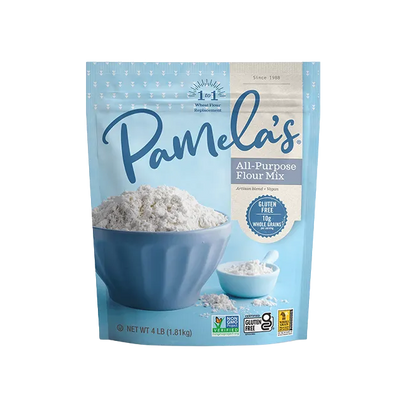
The best gluten-free flour for protein muffins is a neutral, finely milled all-purpose blend that you control the leavening in, which is what Pamela's 1:1 All-Purpose Flour is.
Two reasons it suits this recipe specifically.
It is neutral in flavor. Protein powder already brings a distinct taste, and peanut butter and maple syrup are both assertive. A bean-based or heavily whole-grain blend adds a third competing flavor. This one gets out of the way.
It uses guar gum rather than xanthan gum. In a batter carrying protein powder, which already tightens the crumb, xanthan's slightly elastic quality compounds the problem. Guar gives a softer set.
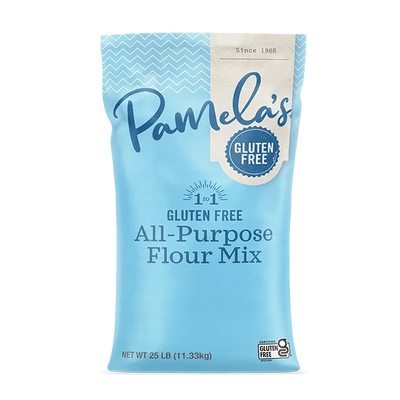
The flour these are built on Pamela's Gluten-Free 1:1 All-Purpose Flour, 4 lb. Rice-based, finely milled, nut-free, and bound with guar gum rather than xanthan. Substitutes one for one for wheat flour. GFCO-certified.
Measure by weight if you can. One and a half cups is about 180 grams. Scooping the cup through the bag can add 20 to 30 grams, and in a recipe already fighting dryness that is the difference between good and disappointing.
What These Muffins Contain
These muffins contain peanuts, egg, and dairy.
The peanuts are the important one. This recipe adds peanut butter, so the finished muffins are not peanut-free. Swap in sunflower seed butter for a peanut-free version, and note that almond or cashew butter would make them contain tree nuts instead.
Dairy comes from the milk and usually from the chocolate chips. If your protein powder is whey or casein based, that is dairy too. Check the chips, which commonly contain milk and soy lecithin.
Eggs are structural here and there is no straightforward substitution, so these are not egg-free or vegan.
Pamela's 1:1 All-Purpose Flour itself is rice-based with no dairy, no eggs, and no nuts. Everything from Pamela's is certified by the Gluten-Free Certification Organization.


