



Gluten-Free Chicken Pot Pie with Biscuit Topping
Chicken pot pie is a dish people love and rarely make, because somewhere in the middle of it there is a pastry crust and a rolling pin and a decision about whether tonight is really a pastry night.
A biscuit topping skips all of that. You make the filling in a skillet, drop spoonfuls of dough across the top, and slide the whole thing into the oven. Twenty minutes later the biscuits are golden and the filling underneath is bubbling up around them.
These use Pamela's Cheddar Garlic Drop Biscuit Mix, which means the topping arrives already carrying garlic, chives, and buttermilk. You fold in sharp cheddar and add water. That is the whole topping.
It feeds six out of one skillet, and the only thing you have to be careful about is not making the filling too thin. So good, no one will guess they are gluten-free, the way Pamela's has done it since 1988.
The Topping Does Not Need a Seasoning Blend
Most recipes for a cheesy biscuit topping reach for a bottled seasoning mix to get there. Garlic powder, dried herbs, something with a lot of paprika in it.
Pamela's Cheddar Garlic Drop Biscuit Mix already has real buttermilk, garlic, and chives in the bag. There is nothing to add and nothing to approximate.
The mix this is built on Pamela's Gluten-Free Cheddar Garlic Drop Biscuit Mix Real buttermilk, garlic, and chives in the mix. Add your own shredded sharp cheddar. GFCO-certified gluten-free and kosher.
The cheese is the part you add, and that is deliberate. Fresh shredded cheddar melts into pockets that you can see and taste. Cheese powder, which is what a shelf-stable mix would have to use, gives you an even flavor and no pockets at all.
Shred it from a block if you can. Pre-shredded cheese is coated with starch to stop it clumping, and that coating keeps it from melting cleanly.
How to Keep the Biscuits from Sinking
This is the one thing that goes wrong, and it is entirely about the filling.
The filling has to be thick enough to hold the dough up. Think gravy, not soup. When you stir it, the spoon should leave a trail that closes slowly rather than instantly.
If it looks thin, simmer it a few minutes longer before the biscuits go on. It will thicken further in the oven, so slightly too thick is the safer direction.
Drop the dough onto the filling rather than pressing it in. The mounds should sit on the surface, not sink into it. Leave gaps between them so steam can escape, which is also how the filling bubbles up through and browns at the edges.
Do not cover the skillet. A lid traps steam and the biscuit bottoms stay pale and wet.
Making the Filling
It is a roux, then broth, then cream. The same technique as a gravy and it takes about fifteen minutes.
Cook the vegetables in butter until soft, sprinkle the flour over them, and let it cook for two minutes before any liquid goes in. That step is what keeps the filling from tasting like raw flour.
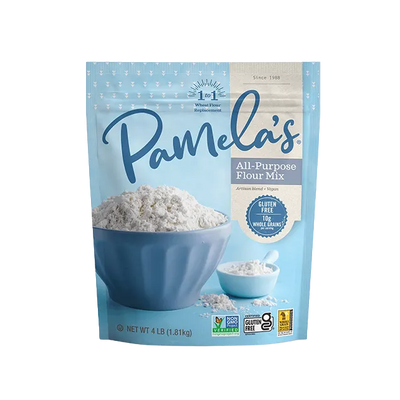
Use a one-to-one gluten-free flour blend for the roux, not the biscuit mix. The mix contains baking powder, and leavening in a sauce tastes metallic.
Add the broth gradually, about a cup at a time, letting each addition come together before the next. That is what prevents lumps.
Use an oven-safe skillet, ideally cast iron, so the filling goes from the stove to the oven without moving. A 10-inch skillet or a 9x13 dish both work.


