



Monte Cristo Sandwiches
A Monte Cristo is what happens when a ham and cheese sandwich decides to become dessert. Ham, turkey, and Swiss go between two slices of bread, the whole thing gets dipped in egg like French toast and griddled in butter until the crust is deep gold and the cheese has gone molten, and then, improbably, it arrives dusted with powdered sugar and a spoonful of raspberry jam on the side. Sweet and salty at the same time, and completely worth the mess. The one thing standing between most gluten-free households and a good Monte Cristo is bread that can survive an egg dip without falling apart, which is exactly what a loaf from Pamela's Bread Mix is for. There is a second recipe further down too, a baked pan version that a Pamela's family has been making for three generations. So good, no one will guess it is gluten-free, the way Pamela's has done it since 1988.
Why You'll Love This Monte Cristo
- Sweet and savory in the same bite. Salty ham, nutty Swiss, and a dusting of powdered sugar with jam on the side.
- Griddled, not deep fried. All of the golden crust, none of the pot of hot oil.
- Twenty minutes at the stove. Once the bread is sliced, these come together fast.
- Bread that actually holds up. A loaf from Pamela's Bread Mix has the structure to take an egg dip and a flip.
- Two ways to make it. The classic griddled sandwich, plus an easy baked pan version for feeding a crowd.
What Is in a Traditional Monte Cristo Sandwich?
A traditional Monte Cristo is ham, turkey, and Swiss cheese layered between two slices of bread, dipped in beaten egg, and fried or griddled in butter until golden, then dusted with powdered sugar and served with raspberry or currant preserves for dipping. That combination of savory filling and sweet finish is the whole identity of the sandwich, and it is what separates it from every other grilled ham and cheese.
The sandwich is the American descendant of the French croque monsieur, and it picked up the turkey, the egg dip, and the powdered sugar somewhere along the way, most likely in Southern California in the 1950s. Restaurant versions often go further and deep fry the sandwich in a thick batter, which is the version most people picture from a diner or a chain menu.
The recipe below is the griddled version. It gets you the same crust, the same molten center, and the same sweet-salty finish, and you can make it in a skillet on a weekday.
The Best Gluten-Free Bread for a Monte Cristo
The best gluten-free bread for a Monte Cristo is a firm, close-crumbed sandwich loaf sliced about 1/2 inch thick, and ideally a day old. This is the one ingredient decision that determines whether the sandwich works.
Here is the problem with most gluten-free bread in this recipe. The sandwich gets dipped in egg batter and then cooked in a hot pan, so the bread has to absorb liquid, hold its shape while you flip it, and stay intact under a filling that is heavier than it looks. Bread that is too soft, too open-crumbed, or too fresh turns to paste in the batter. This is also why the packaged gluten-free sandwich bread that works fine for a cold turkey sandwich often falls apart here.
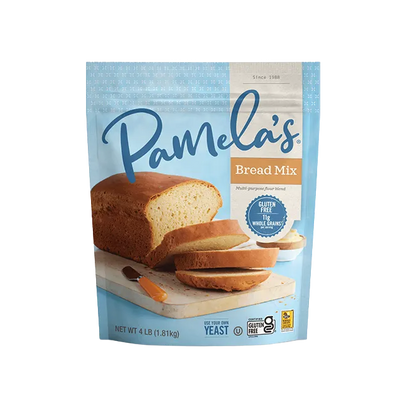
A loaf baked from Pamela's Gluten-Free Bread Mix has the structure this recipe needs, and it lets you cut your own slices at the thickness you want rather than working with whatever a bag gives you.
Bake the loaf that makes this work Pamela's Gluten-Free Bread Mix, 19 oz. A yeast packet is included in the box. One loaf gives you enough slices for four Monte Cristos with the heels left over for croutons. GFCO-certified.
Two things that help either way: slice the bread a day ahead and leave it out uncovered so it dries slightly, and never use bread straight from the freezer without thawing it fully first.
How to Get a Golden Crust and a Melted Middle
The difficulty with this sandwich is that the outside browns faster than the inside melts. Four things fix it.
Dip, do not soak. Two or three seconds per side is enough. The batter should coat the bread, not saturate it. A soaked slice steams from the inside and never crisps.
Medium heat, not medium-high. High heat gives you a dark crust over cold cheese in about ninety seconds. Medium heat takes three to four minutes a side and gets the cheese there in time.
Butter, and enough of it. Butter browns the crust in a way oil does not, because the milk solids are what create the color and the flavor. Add a fresh knob to the pan between batches.
Cover the pan for the first minute of the second side. A lid traps enough heat to finish the cheese without darkening the crust further. This is the trick that makes the difference, and almost nobody does it.
Room-temperature filling helps too. Deli meat and cheese straight from the fridge add a full minute of cold to the center. Set them out while you slice the bread.


