




Newly Diagnosed with Celiac Disease: Your First 30 Days
This article has been reviewed and approved by the National Celiac Association (NCA).
If you were just diagnosed with celiac disease, here is the honest version: the first month is the hardest part, and it gets genuinely easier from here. This guide walks you through your first 30 days one week at a time, from clearing out your pantry to finding foods you actually look forward to eating. And if you are going gluten free for another reason your healthcare provider recommended, everything here applies to you too.
We have been making gluten-free food since 1988, back when a diagnosis meant baking everything from scratch and explaining the word "gluten" to your grocer. A lot has changed. Let's get you set up.
Week 1: Learn the Landscape (Don't Overhaul Everything Yet)
Your only jobs this week are to understand what contains gluten and to lean on your healthcare team for the medical side of your diagnosis. Questions about symptoms, follow-up testing, or family screening belong with them. Questions about dinner belong here.
Gluten is a protein found in wheat, barley, and rye. That covers the obvious suspects like bread, pasta, and crackers, but it also hides in places you would never think to look: soy sauce, many salad dressings, some soups, licorice, and certain seasoning blends. You do not need to memorize every hidden source this week. You need one habit: read the label on everything before it goes in your cart or your mouth.
If you want structured learning beyond your appointments, the National Celiac Association offers a free online course, Understanding and Managing Gluten-Related Conditions, that walks through celiac disease and the gluten-free diet at a beginner-friendly pace. It is one of the best "week one" resources we know of, and it costs nothing.
Start with what you CAN eat, because the list is longer than the internet makes it feel. Plain meat, poultry, and fish. Eggs. Fruits and vegetables. Rice, corn, potatoes, and quinoa. Most dairy. Beans and lentils. Nuts and seeds. A huge portion of a normal grocery store never contained gluten in the first place.
You Are Not Doing This Alone
Before we get to pantries and toasters, one thing that matters more than either: people. Research and lived experience agree that connecting with others who eat the way you now eat makes this transition faster and lighter. Nobody explains restaurant strategy like someone five years ahead of you on the same road.
Pamela's is a proud sponsor of the National Celiac Association (NCA), a nonprofit that has supported the celiac and gluten-sensitive community for decades, and their support network is the piece of month one most people discover too late:
- Support Groups and Local Partners across the country, searchable on the NCA site, for in-person connection with people who get it.
- A virtual support group that meets monthly online, so geography is no excuse.
- ROCK (Raising Our Celiac Kids), their program for parents and families navigating a child's diagnosis, which comes with its own set of challenges (birthday parties, school lunches, that one grandparent) that deserve their own community.
- A searchable restaurant database and Ask the Experts Q&A library for the questions that pop up at 9pm on a Tuesday.
We sponsor the NCA because their work is the nonprofit counterpart of ours: making gluten-free life feel normal. Bookmark them this week; you will use them all year.
Week 2: Reset Your Kitchen
Now the practical work begins. There are two projects this week: removing gluten-containing foods and addressing cross-contact, which is when gluten transfers to otherwise gluten-free food through shared surfaces, tools, or appliances.
The pantry pass. Go shelf by shelf. Anything with wheat, barley, rye, or malt goes in a donation box (unopened items) or to a gluten-eating household member's dedicated shelf. When a label is unclear, look it up or let it go.
The cross-contact checklist. Here is some genuinely good news: most of your kitchen does not need replacing. Soap and water removes gluten, so items in good condition just need a thorough wash. A few things do deserve special attention in a shared household:
- Your toaster. Crumbs are unavoidable. A dedicated gluten-free toaster is the single most common recommendation in the celiac community.
- Damaged or cracked items. Cutting boards, utensils, pots, and pans that are cracked, split, or deeply scratched can hold onto residue in ways washing does not reach. Anything still in good condition is fine to keep, because soap and water removes gluten.
- Colanders. Pasta water leaves gluten in every hole, so scrub yours well or keep one aside for gluten-free pasta.
- Condiment jars. Shared butter, jam, and peanut butter pick up crumbs from knives. Squeeze bottles or labeled duplicates solve it.
If your whole household is going gluten free, this is simpler. Deep clean surfaces, wash everything thoroughly, and replace only what is cracked or damaged.
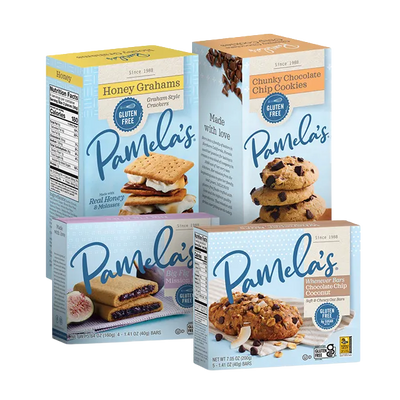
Restock the basics. This is where a certified gluten-free starter set earns its keep. Our Starter Packs exist for exactly this week: pantry staples like pancake mix, flour, and snacks so the first "what do we even eat now" moments have an easy answer.
Week 3: Learn Labels for Real
Two label systems matter in the US, and knowing the difference will save you a hundred confused grocery aisle moments.
"Gluten-free" on the label. The FDA allows this claim only on foods containing less than 20 parts per million (ppm) of gluten. It is a regulated term, not marketing.
Third-party certification. Independent organizations verify gluten-free claims through their own standards and audits. The Gluten-Free Certification Organization (GFCO), whose mark appears on every Pamela's product, certifies to a standard of 10 ppm or less, which is stricter than the FDA baseline. When you see a certification mark, an outside organization has verified the claim rather than the brand alone.
Beyond the front of the package, build a 10-second scan habit: check the allergen statement for wheat, then scan the ingredients for barley, rye, malt, and brewer's yeast, which the allergen statement does not cover. Our full ingredient and allergen details for every product live on our Allergy & Dietary Information page, because you should never have to guess.
Week 4: Make Food You Look Forward To
Here is the week that changes your outlook. Surviving on plain rice and grilled chicken is not the goal. The goal is Saturday pancakes that make the whole house show up to the table.
Some first wins that require no baking experience:
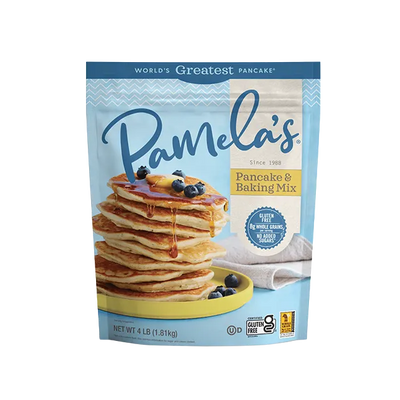
- Classic pancakes made with our Baking & Pancake Mix. This is the recipe that built Pamela's reputation.
- Banana bread, the most-searched recipe on our site for a reason.
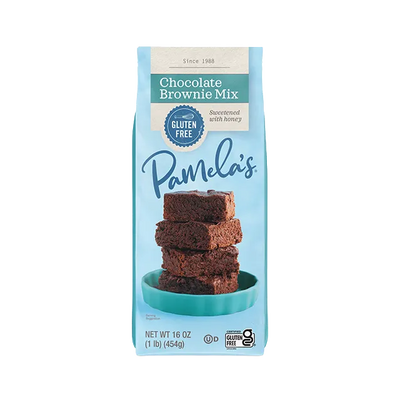
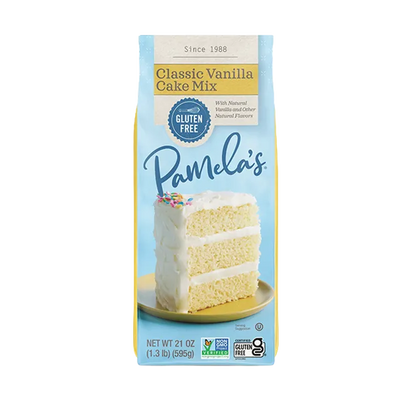
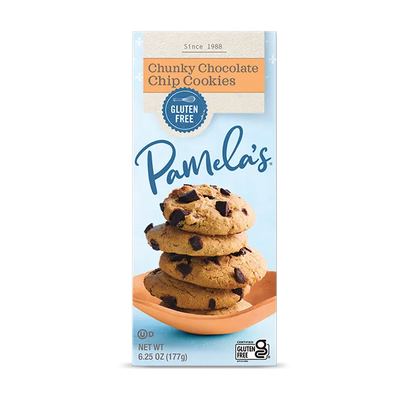
- Cookies, brownies, or a boxed-mix cake for the first birthday or bad day that needs one.
One mindset shift worth adopting early: gluten-free food made to be gluten-free from the start beats "converted" versions of wheat recipes. Recipes and mixes engineered around gluten-free flours behave the way baking should. That is the difference between food that gets called "fine" and food that disappears off the plate. Or, as we like to say: nobody asks if it's gluten free.
Your First 30 Days, Condensed
- Days 1 to 7: Learn what contains gluten. Route medical questions to your healthcare team. Take the NCA's free course. Eat naturally gluten-free basics while you learn.
- Days 8 to 14: Clear the pantry, handle cross-contact (toaster, damaged items, colander, condiments), restock staples. Find your NCA support group, local or virtual.
- Days 15 to 21: Master the two-layer label check: FDA "gluten-free" claim plus third-party certification marks.
- Days 22 to 30: Cook things you love. Find your pancake morning. Build a small rotation of reliable favorites.
You will make mistakes. Everyone in this community has a story about month one. What matters is the trajectory, and 30 days from now, the grocery store will already feel less like a minefield and more like a store.
Helpful Resources
- National Celiac Association: nonprofit support network with local and virtual support groups, a free course for the newly diagnosed, and the ROCK program for families. Pamela's is a proud NCA sponsor.
- FDA: Gluten and Food Labeling: the federal rules behind the "gluten-free" claim, explained in plain language.
- Gluten-Free Certification Organization: the independent certifier behind the mark on every Pamela's package and its published standard.
- Your healthcare team: for anything medical, diagnosis, or symptom related, always start there.


