
Gluten-Free Turkey Gravy

Gluten-free turkey gravy being poured from a gravy boat, thickened smooth with no lumps

Gravy is the dish that quietly ends a gluten-free Thanksgiving. Everything else can be worked around. Gravy is wheat flour and pan drippings, and the jar on the shelf is wheat flour too.

This is the version that fixes it, and it does not taste like a substitute. The drippings do what drippings always do. The thickener is Pamela's Gluten-Free 1:1 All-Purpose Flour, toasted in a dry pan first, which is the step that makes the difference.

Serve this with pride. The taste is outstanding and nobody will guess it is gluten-free.

Why Toasting the Flour Matters

In a traditional gravy, the flour gets cooked in fat to make a roux, and that cooking is what drives off the raw, pasty taste of uncooked flour. Skip it and you can taste it.

Gluten-free flour blends need that step even more, because rice flours have a chalky edge when they are raw. So the flour goes into a dry nonstick pan over medium heat and gets whisked constantly until it turns from white to tan, 5 to 10 minutes. It will smell nutty and slightly toasted when it is there.

Whisk the whole time and keep the heat moderate. Flour goes from tan to burnt quickly, and burnt flour will carry through the whole gravy.

Making the Stock Ahead

The giblets and neck that come in the turkey are the backbone of the gravy, and most people throw them out. Simmered with the larger pieces of onion, celery, and carrot for 2 to 6 hours, they give you a stock with more turkey flavor than anything from a carton.

Do this the day before. Strain it, refrigerate it, and you have one less thing happening while the turkey rests. A quarter of the water can be white wine if you like.

Separating the Fat

The drippings in the roasting pan are pure flavor sitting under a layer of fat you do not want in the gravy.

Scrape the browned bits off the bottom of the pan into the juices, adding a splash of wine or water if the pan has gone dry, then strain everything into a 2 cup measuring cup and put it in the freezer. The fat rises and firms up. Draw the juices out from underneath with a baster, or wait until the fat is solid and lift it off the top.

Then top the defatted drippings up to 2 cups with your reserved stock. That is your gravy base.

Which Pamela's Flour to Use

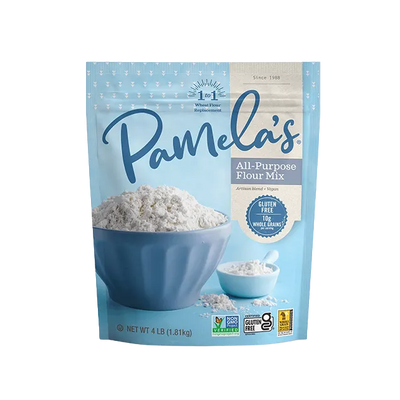
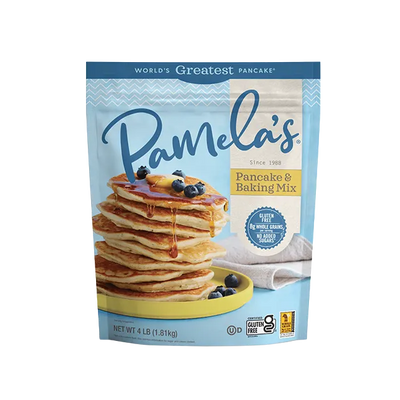
The 1:1 All-Purpose Flour is the right one. It is a plain blend of brown rice flour, tapioca starch, white rice flour, potato starch, sorghum flour, arrowroot starch, guar gum, sweet rice flour, and rice bran, with no sugar and no leavening to get in the way of a savory sauce.

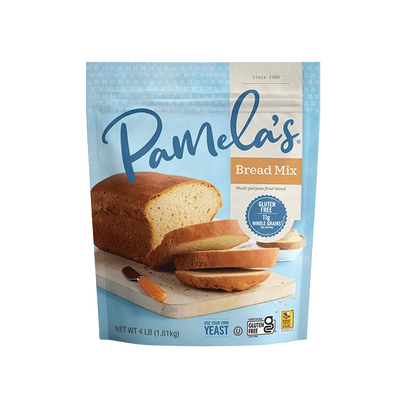
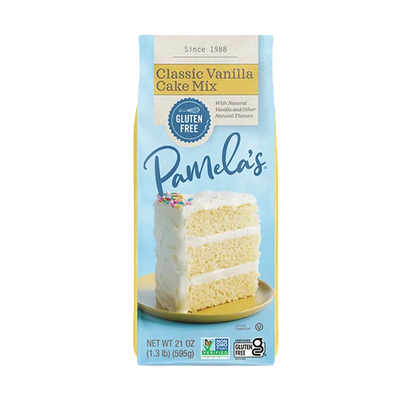
Pamela's Gluten-Free Bread Mix also works if that is what is in the cupboard. One thing to watch: the 19 oz bag has a yeast packet inside it. Set the packet aside before you measure. Yeast in a gravy slurry is not a mistake you can fix afterwards.

Fixing Lumpy or Thin Gravy

Lumps come from adding the thickener too fast. The slurry is the insurance: mix the toasted flour with the quarter cup of cold milk or water and work it smooth with a fork before any of it goes near the hot pan. Then pour it into the simmering base slowly, whisking the whole time.

If lumps turn up anyway, pour the gravy through a fine strainer. Nobody will know.

If it is thinner than you want, let it simmer longer and keep whisking. If it goes too far the other way, thin it with a little more stock or milk.

Gravy for Biscuits, Too

This is not only a November recipe. The same method, built on sausage drippings instead of turkey, is the gravy half of biscuits and gravy, and it is the reason a gluten-free household can have that breakfast at all.

Make-Ahead and Storing

The stock holds 3 days refrigerated or 3 months frozen. The finished gravy keeps 2 days in the refrigerator.

Reheat it gently and whisk as it comes back up, since gluten-free thickeners can separate as they sit. A splash of stock will bring it back together.

More Gluten-Free Thanksgiving Recipes

Made with

Gluten-Free 1:1 All-Purpose Flour, 4 lb. (opens in a new tab)
$19.49 Rated 4.9 out of 5 from 99 reviews.

Free shipping on orders $39+

Pack Size

Prep Time 20 minutes
Cook Time 3 hours
Total Time 3 hours 20 minutes
Yield 8
Serving Size 1/4 cup

Ingredients

  • Giblets and neck from the turkey
  • 1 large onion, half diced and half cut into larger pieces, kept separate, about 1 cup each
  • 4 stalks celery, half diced and half cut into larger pieces, kept separate, about 1 cup each
  • 4 medium carrots, half diced and half cut into larger pieces, kept separate, about 1 cup each
  • White wine, optional, for the stock and the pan
  • 1 whole turkey, for roasting
  • 1/4 cup Pamela's Gluten-Free 1:1 All-Purpose Flour, or Pamela's Gluten-Free Bread Mix with the yeast packet set aside
  • 1/4 cup cold milk or water, for the slurry
  • 3/4 teaspoon kosher salt, or to taste
  • 1/4 teaspoon black pepper, or to taste
  • 2 tablespoons to 1/2 cup milk or cream, optional

Used in this recipe

Gluten-Free 1:1 All-Purpose Flour, 4 lb. (opens in a new tab)
$19.49 Rated 4.9 out of 5 from 99 reviews.
Pack Size

Directions

  1. Make the stock, ideally a day ahead. Put the turkey giblets and neck and the larger pieces of onion, celery, and carrot into a medium stockpot. Add water to just cover, substituting white wine for up to a quarter of the water if you like, and simmer 2 to 6 hours.
  2. Strain the stock into another container and reserve it for the gravy. Discard the giblets, neck, and vegetables.
  3. Roast the turkey. Spray a roasting pan with nonstick cooking spray and scatter the diced onion, carrot, and celery over the bottom. Add the turkey and roast it following your own recipe for temperature, timing, basting, and covering.
  4. As the turkey roasts, add white wine or water to the pan as needed so the vegetables on the bottom do not burn. When the turkey is done, move it to a cutting board to rest.
  5. Scrape the bottom of the roasting pan to loosen the browned bits of vegetable and turkey into the juices. If the pan is dry, add a little white wine or water and use a whisk to work the browned bits off the bottom and sides.
  6. Strain the pan contents into a 2 cup measuring cup and put it in the freezer. The fat will rise to the top. Draw the juices out from the bottom with a turkey baster and leave the fat behind, or wait until the fat solidifies and lift it off. Discard the fat.
  7. Add the reserved stock to the defatted drippings to make 2 cups total.
  8. Toast the flour. In a dry nonstick pan over medium heat, whisk the 1/4 cup of flour constantly until it turns from white to tan and smells nutty, 5 to 10 minutes. Keep whisking and do not let it darken past tan.
  9. In a small cup, stir the toasted flour together with the 1/4 cup of cold milk or water with a fork until the slurry is completely smooth with no lumps.
  10. Pour the drippings and stock into a medium saucepan over medium heat. Add the slurry slowly, whisking constantly. Stir in the cream or milk if you are using it.
  11. Simmer, whisking, until the gravy thickens to the consistency you want. Season with the salt and pepper to taste and serve in a warmed bowl or gravy boat.

Recipe Tips & Notes

Toast the Flour, Do Not Skip It

Toasting is what removes the raw taste of uncooked flour, and gluten-free blends need it more than wheat flour does because rice flours are chalky when raw.

Dry nonstick pan, medium heat, constant whisking, 5 to 10 minutes, white to tan. It goes from tan to burnt fast, and burnt flour will carry through the finished gravy.

The Bread Mix Yeast Packet

If you use Pamela's Bread Mix instead of the 1:1 All-Purpose Flour, the 19 oz bag has a yeast packet inside it.

Set the packet aside before you measure. Yeast in a gravy slurry cannot be fixed afterwards.

Lumps and Consistency

Work the slurry completely smooth with a fork before it goes anywhere near the hot pan, and add it to the simmering base slowly while whisking.

If lumps appear anyway, pour the gravy through a fine strainer. If it is too thin, simmer it longer. If it is too thick, loosen it with stock or milk.

Make-Ahead and Storing

Make the stock a day ahead. It holds 3 days refrigerated or 3 months frozen.

Finished gravy keeps 2 days refrigerated. Reheat gently and whisk as it warms, since gluten-free thickeners can separate as they sit. A splash of stock brings it back.

Dairy-Free

Use water for the slurry instead of milk and leave out the optional cream. The gravy thickens the same way.

Recipe FAQs

No. Traditional gravy is thickened with wheat flour, and most jarred and packet gravies are too, so gravy is one of the dishes to check rather than assume at a holiday meal. Pan drippings on their own are gluten-free. It is the thickener that needs changing.

A slurry of toasted gluten-free flour and cold liquid, added slowly to the simmering drippings. Pamela's 1:1 All-Purpose Flour works well here because it is a plain blend with no sugar or leavening to interfere with a savory sauce.

Yes. A slurry of cornstarch or arrowroot starch and cold water will thicken drippings, using about half as much starch as you would flour. The texture is glossier and thinner than a flour gravy, and it does not reheat as well the next day.

To cook out the raw flour taste that a roux would normally handle. Gluten-free blends need it more than wheat flour, since rice flours taste chalky when raw. Whisk it in a dry pan over medium heat until it turns tan, 5 to 10 minutes.

Make the stock from the giblets and neck up to 3 days ahead, or freeze it for 3 months. The gravy itself needs the pan drippings, so it comes together while the turkey rests. Reheat leftover gravy gently and whisk as it warms.

Reviews

Have you made this recipe? We would love to hear how it turned out, and any swaps you tried.

No reviews yet. Have you made this recipe? Be the first to tell us how it went.

Write a review

Your rating

Never shown publicly.

Reviews appear after a quick check by our team.

Have a question about ingredients or allergens? Our care team is happy to help.

Top Pamela's Searches